
Odoo Modules: An Overview of the Main Modules
Odoo Modules: An Overview of the Main Modules
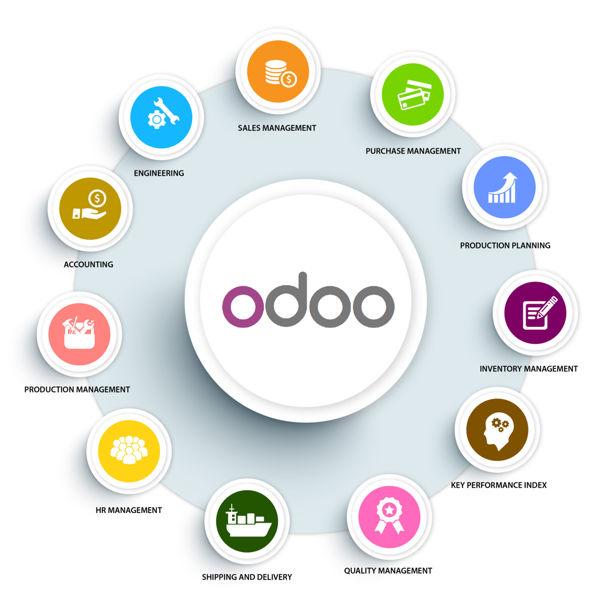
Odoo is a comprehensive open-source enterprise resource planning (ERP) software that offers a range of modules to manage various business operations. The main Odoo modules are designed to cater to different aspects of a business, providing a seamless and integrated experience. Here’s an overview of the main Odoo modules:
1. Sales Module
Manage sales orders, invoices, and customer relationships
Automate sales processes, from lead generation to conversion
Track sales performance and analyze customer behavior
2. CRM Module
Manage customer interactions, contacts, and opportunities
Automate marketing campaigns and lead generation
Analyze customer behavior and preferences
3. Accounting and Finance Module
Manage financial operations, including invoicing, payments, and expenses
Track financial performance, assets, and liabilities
Automate accounting processes, such as reconciliations and journal entries
4. Inventory and Warehouse Management Module
Manage inventory levels, product movements, and storage locations
Automate inventory tracking, replenishment, and optimization
Track warehouse operations, including receipts, deliveries, and stock levels
5. Manufacturing Module
Manage production planning, scheduling, and execution
Automate manufacturing processes, including work orders and quality control
Track production costs, inventory levels, and product quality
6. Purchase Module
Manage purchase orders, suppliers, and inventory replenishment
Automate purchase processes, including RFQs, POs, and receipts
Track supplier performance and inventory levels
7. Project Management Module
Manage projects, tasks, and timelines
Automate project scheduling, resource allocation, and tracking
Analyze project performance, progress, and profitability
8. Human Resources Module
Manage employee data, payroll, and benefits
Automate HR processes, including recruitment, onboarding, and performance evaluation
Track employee performance, attendance, and time off
9. Marketing Module
Manage marketing campaigns, leads, and customer engagement
Automate marketing processes, including email marketing and social media integration
Analyze marketing performance, ROI, and customer behavior
10. Website and E-commerce Module
Manage website content, design, and user experience
Automate e-commerce processes, including online orders, payments, and shipping
Track website analytics, customer behavior, and conversion rates
These main Odoo modules provide a solid foundation for businesses to manage their operations efficiently and effectively. By integrating these modules, businesses can streamline their processes, improve productivity, and drive growth.
Top 10 benefits of SharePoint
Here are the top 10 benefits of SharePoint:
1. Improved Collaboration: Enhance teamwork and communication across departments and locations.
2. Centralized Document Management: Store, organize, and share files in a secure, accessible repository.
3. Streamlined Process Automation: Automate workflows, approvals, and business processes with Power Automate integration.
4. Enhanced Security and Compliance: Protect sensitive data with robust security features, permissions, and compliance tools.
5. Customizable Workspaces: Create tailored sites for teams, projects, or departments to boost productivity.
6. Real-time Information Sharing: Share news, updates, and knowledge across the organization with SharePoint News and Communication Sites.
7. Search and Discovery: Quickly find documents, people, and information with powerful search capabilities.
8. Mobile Accessibility: Access SharePoint from anywhere, on any device, for enhanced flexibility.
9. Integrated Microsoft Tools: Seamlessly integrate with Office 365, Teams, OneDrive, and other Microsoft applications.
10. Scalable and Flexible: Adapt to changing business needs with SharePoint’s cloud-based, scalable architecture.
Additional benefits include:
Version control and document tracking
Electronic forms and surveys
Business intelligence and analytics
Customizable workflows
Integration with third-party applications
SharePoint offers a robust platform for organizations to:
Boost productivity
Enhance collaboration
Improve information management
Streamline processes
Drive business growth
Want to unlock the full potential of SharePoint? Contact us to explore how our expert team can help!
Embracing the Future: Unlocking Business Success through Digital Transformation

“Embracing the Future: Unlocking Business Success through Digital Transformation”
In today’s fast-paced, technology-driven world, businesses must adapt to stay ahead. Digital transformation is no longer a buzzword, but a necessity for survival. It’s a journey that revolutionizes the way organizations operate, innovate, and interact with customers.
Why Digital Transformation Matters
Enhanced Customer Experience: Personalized, seamless interactions across channels
Increased Efficiency: Automation, streamlined processes, and reduced costs
Data-Driven Decision-Making: Insights from analytics and AI-powered tools
Competitive Advantage: Staying relevant in a rapidly changing market
Innovation and Growth: New business models, revenue streams, and opportunities
Key Components of Digital Transformation
Cloud Computing: Scalable, secure, and flexible infrastructure
Artificial Intelligence (AI) and Machine Learning (ML): Intelligent automation and decision-making
Internet of Things (IoT): Connected devices and real-time data
Big Data Analytics: Actionable insights from data-driven intelligence
Cybersecurity: Protecting sensitive data and ensuring trust
Getting Started
Assess Your Current State: Identify areas for improvement
Set Clear Goals: Align digital transformation with business objectives
Choose the Right Technology: Partner with experts to select suitable solutions
Foster a Culture of Innovation: Encourage experimentation and learning
Measure Progress: Track key performance indicators (KPIs) and adjust
Unlock Your Business Potential
Embark on your digital transformation journey today. Stay competitive, drive innovation, and achieve unprecedented success.
Ready to get started? Contact us to explore how our expert team can guide your digital transformation!
Digital Marketing

Unlock Success in 2024: The Vital Role of Digital Marketing
In today’s digital age, a robust online presence is crucial for businesses to thrive. Digital marketing has become essential for:
Reaching wider audiences: Connect with potential customers worldwide.
Targeting specific customers: Use data to tailor your message.
Measuring campaign effectiveness: Track ROI and adjust strategies.
Maximizing ROI: Optimize budgets for better returns.
Enhancing customer engagement: Build brand loyalty.
Staying ahead of competitors: Differentiate your brand.
Top Digital Marketing Trends for 2024
Personalized Marketing Experiences: Tailor your message to individual customers using data and analytics.
Example: Amazon’s product recommendations based on browsing history.
Leveraging First-Party Data: Build trust and collect data directly from customers.
Example: Loyalty programs that reward customers for sharing data.
Optimizing for Voice Search: Ensure your content is voice-search friendly.
Example: Using natural language in website content.
Measuring Attention Metrics: Go beyond clicks and impressions.
Example: Tracking time spent on website pages.
Harnessing User-Generated Content: Encourage customers to share their stories.
Example: Social media contests featuring customer photos.
Benefits of Digital Marketing
Increased brand visibility: Establish your brand online.
Improved website traffic: Drive quality leads.
Enhanced customer engagement: Build brand loyalty.
Better ROI measurement: Track campaign effectiveness.
Competitive advantage: Stay ahead of competitors.
Data-driven decision-making: Inform business strategies.
Flexibility and scalability: Adapt to changing market conditions.
Digital Marketing Strategies for 2024
Content Marketing: Create valuable, relevant content.
Example: Blog posts, videos, podcasts.
Social Media Marketing: Engage with your audience.
Example: Facebook, Instagram, Twitter.
Email Marketing: Nurture customer relationships.
Example: Newsletters, promotional emails.
Search Engine Optimization (SEO): Boost search rankings.
Example: Keyword research, optimization.
Pay-Per-Click (PPC) Advertising: Targeted advertising.
Example: Google Ads, Facebook Ads.
Tips for Digital Marketing Success
Set clear goals and objectives: Define your target audience and metrics.
Understand your target audience: Research demographics, interests.
Choose the right channels: Select platforms that align with your audience.
Create engaging content: Use storytelling, visuals.
Monitor and analyze performance: Track metrics, adjust strategies.
Stay up-to-date with industry trends: Attend webinars, conferences.
Stay Ahead of the Competition
Incorporate digital marketing into your strategy to:
Drive business growth: Increase revenue, expand market share.
Enhance customer experience: Build brand loyalty.
Stay competitive: Differentiate your brand.
Increase revenue: Boost sales.
Build brand awareness: Establish your brand online.
Tips to consider before buying an HR Management System (HRMS)

Here are some valuable tips to consider before buying an HR Management System (HRMS):
1. Define Your Requirements
Identify key HR processes to automate (e.g., recruitment, payroll, performance management)
Determine necessary features and functionalities
Consider industry-specific needs (e.g., compliance regulations)
2. Assess Your Organization’s Size and Complexity
Number of employees and locations
Organizational structure and hierarchy
Existing HR systems and integrations
3. Evaluate Core HRMS Modules
Recruitment and applicant tracking
Employee data management
Payroll and benefits administration
Performance management
Time and attendance tracking
Learning management
4. Consider Integration and Compatibility
Integration with existing systems (e.g., ERP, CRM)
Compatibility with various devices and browsers
API connectivity for custom integrations
5. User Experience and Adoption
Intuitive interface and user-friendly navigation
Mobile accessibility and responsiveness
Training and support resources
6. Security and Compliance
Data encryption and storage
Access controls and permissions
Compliance with regulations (e.g., GDPR, HIPAA)
7. Scalability and Flexibility
Ability to adapt to growing organizational needs
Customization options for unique processes
Cloud-based or on-premise deployment
8. Vendor Reputation and Support
Research vendor reputation and customer reviews
Evaluate support channels (e.g., phone, email, chat)
Consider implementation and training services
9. Cost and ROI
Total cost of ownership (TCO)
Return on investment (ROI) analysis
Pricing models (e.g., subscription, perpetual license)
10. Demo and Trial
Request demos to assess system functionality
Conduct trials or pilots to test usability
Additional considerations:
Customization and configuration options
Reporting and analytics capabilities
Employee self-service portal
Social media and collaboration tools
Global capabilities (for multinational organizations)
Before making a final decision:
Create a weighted scoring system to evaluate vendors
Conduct a request for proposal (RFP) process
Consult with stakeholders and HR experts
By following these tips, you’ll be well-equipped to find the right HRMS for your organization’s unique needs.